
The Center for Policy Impact in Global Health (CPIGH) is hosting a initiative led by Dr Jonathan Quick, Associate Faculty Member of CPIGH, that focuses on market driven epidemics.

What are Market Driven Epidemics (MDEs)?
Unhealthy use of consumer products such as tobacco, sugar-laden foods, prescription opioids, ultra-processed foods, and firearms contribute to an estimated one million annual deaths in the U.S. and at least 23 million annual worldwide deaths. Such products contribute to heart disease, obesity, diabetes, cancers, and drug addiction and cost economies and health systems trillions of dollars.
We define market-driven epidemics (MDEs) as “a significant increase in the consumption of a consumer product whose overuse or misuse has been proven to cause death, disability, and other harmful effects; whose consumption has been accelerated by aggressive marketing;
“whose harmful effects are hidden, denied, or otherwise minimized by producers; and for which effective mitigation is actively resisted by producers”[1].
MDEs represent a distinct dynamic within the broader landscape of commercial determinants of health (CDoH). The distinguishing feature of the MDE methodology is its core focus on the question: “What does it take to significantly and sustainably bend downward the epidemic curves of unhealthy product use and consequent harms?” The MDE methodology is thus an action-oriented public health approach, which builds on prior successful mitigation strategies to quicken epidemic response activities. MDEs are behavioral epidemics that have been found to require a combination of interventions to reduce a product’s unhealthy use by changing the behaviors of producers, their supply chains, and individual consumers.
The Market-driven epidemics approach looks at this dynamic through a 5-phase framework:

In past MDEs, the time elapsed between phases has been as long as decades, during which people fell ill and passed away. By identifying which phase an emerging MDE is in, we can see what type of actions in the past have progressed the MDEs between phases and employ those to save lives by avoiding this lag and sustainably decreasing product consumption and harm.
Key Phase Events:
We have identified key phase events that mark the progression of an MDE. Such events (not in requisite order) are: suspicion of harm, confirmation of harm, industry internal awareness of harm, industry public acknowledgment of harm, consumption tipping point, and associated deaths tipping point.
Tobacco
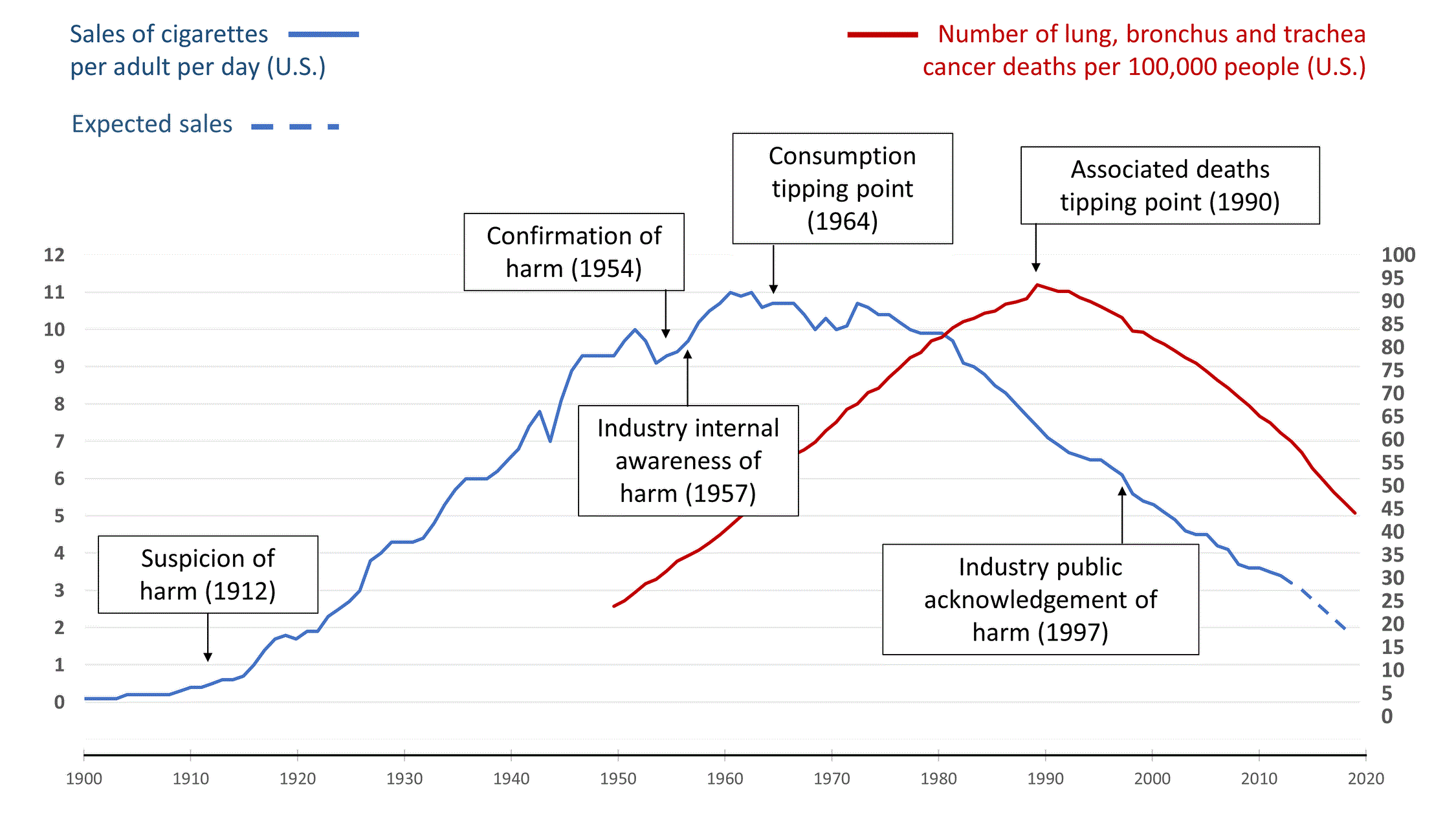
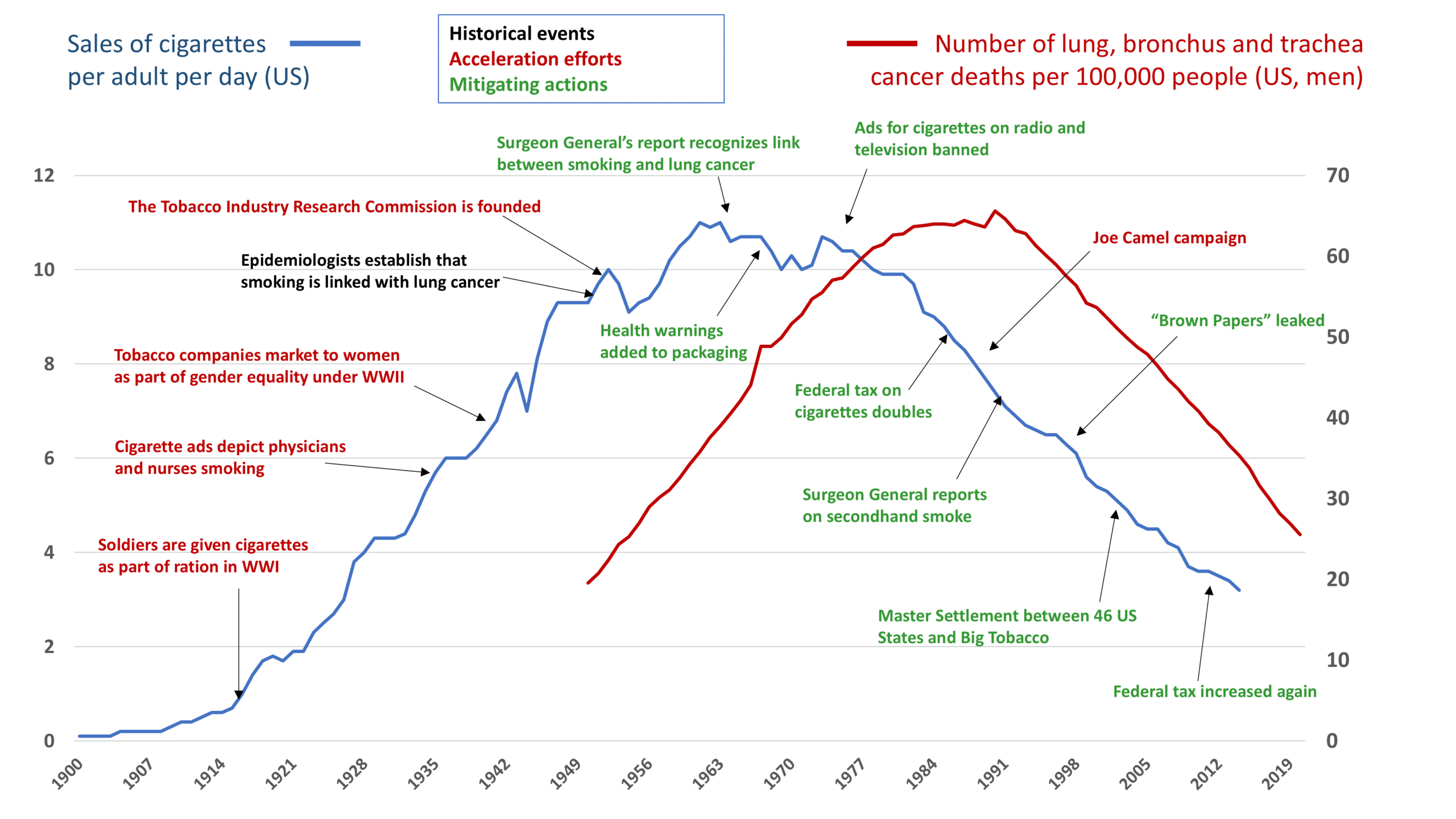
Considering company responsibility in making market-driven epidemics, it is helpful to see, for example, how much time elapsed between the industry internally knowing their product is harmful and when (or if) they acknowledged its harm on a graph showing the lives lost between these events occurring. tellus, luctus nec ullamcorper mattis, pulvinar dapibus leo.
Opioids
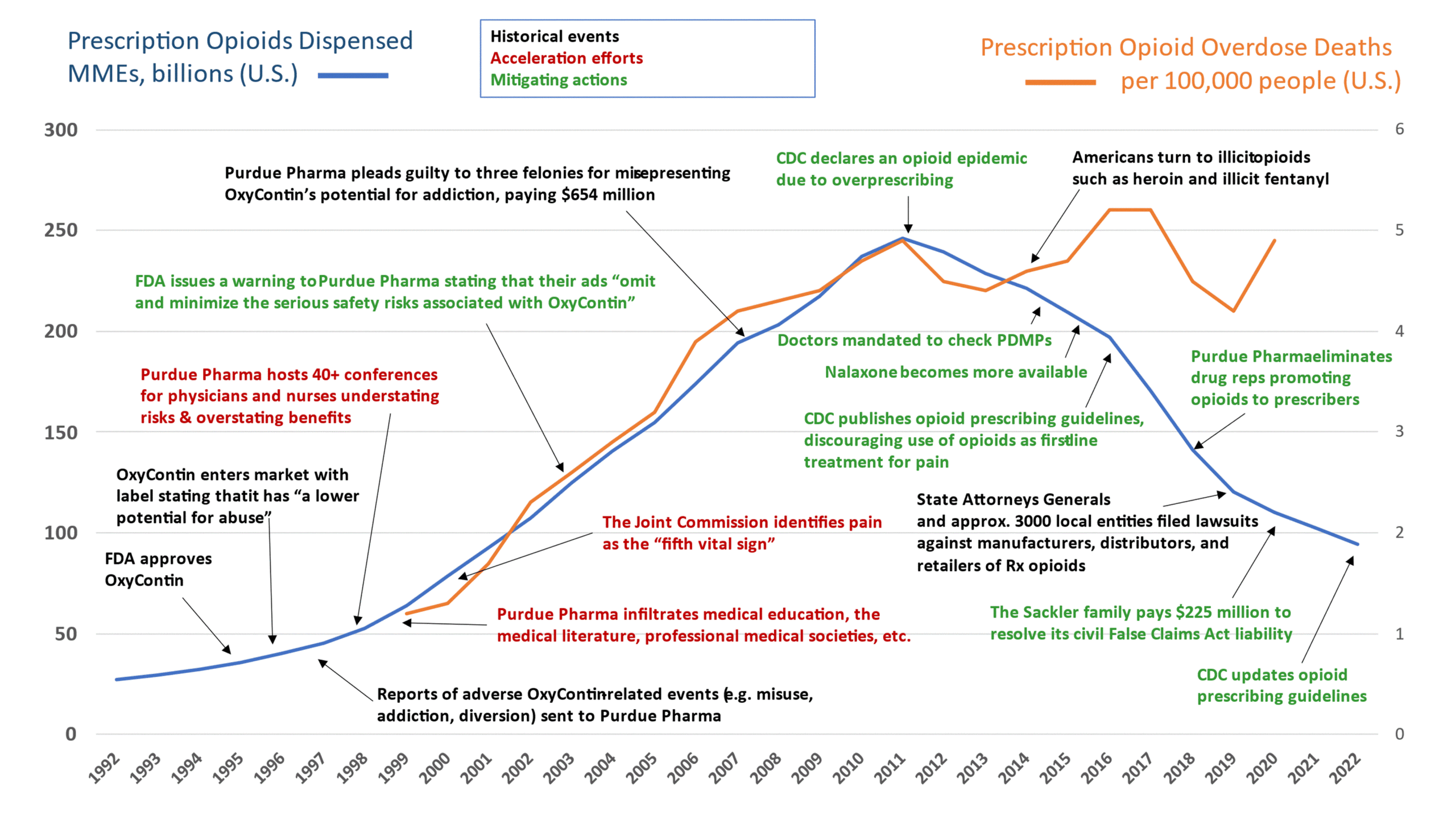

It is helpful to see how much time elapses between suspicion of harm and confirmation of harm. Could there have been ways to speed up this process besides the time rigorous studies naturally require?
Sugar
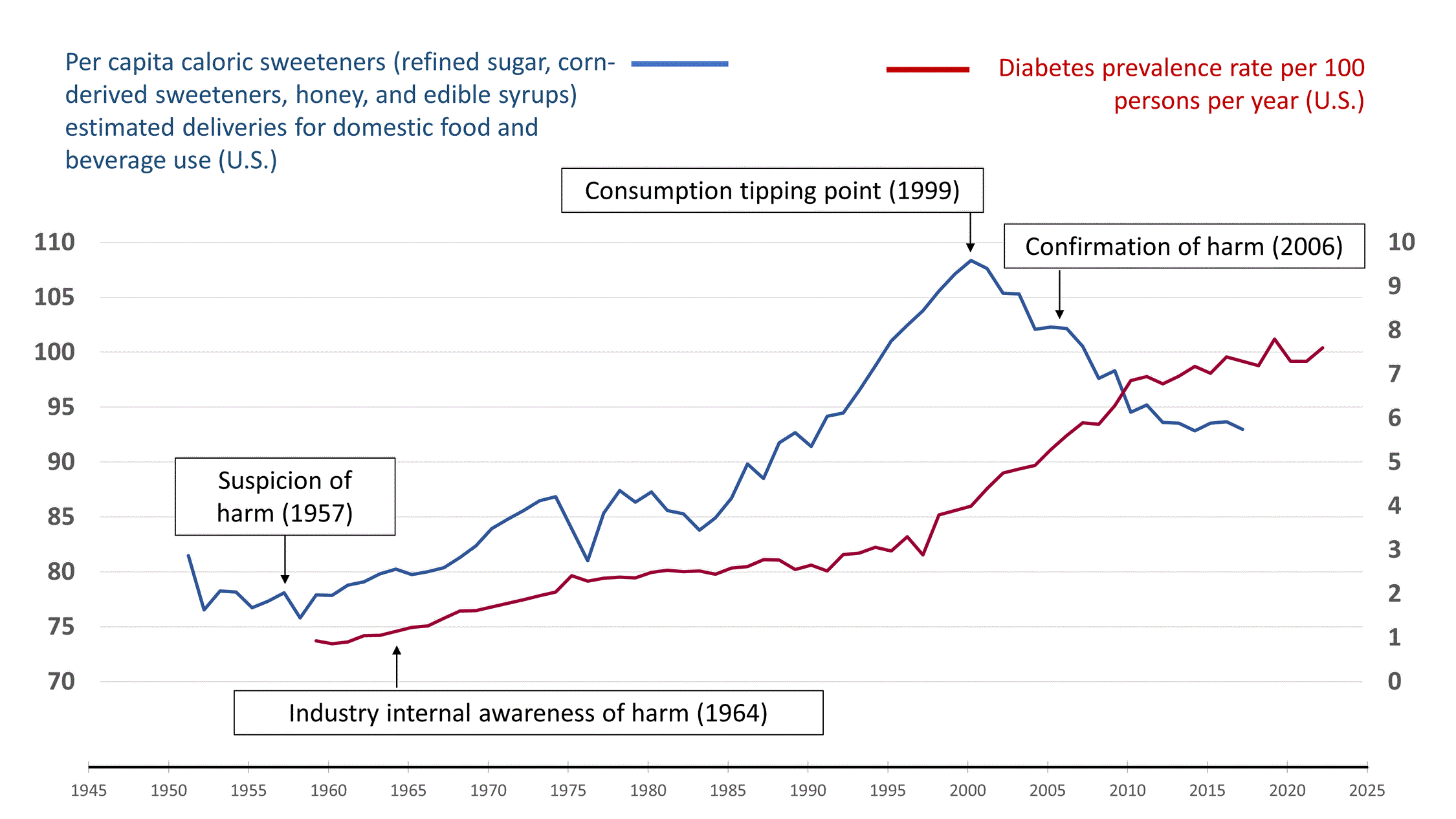
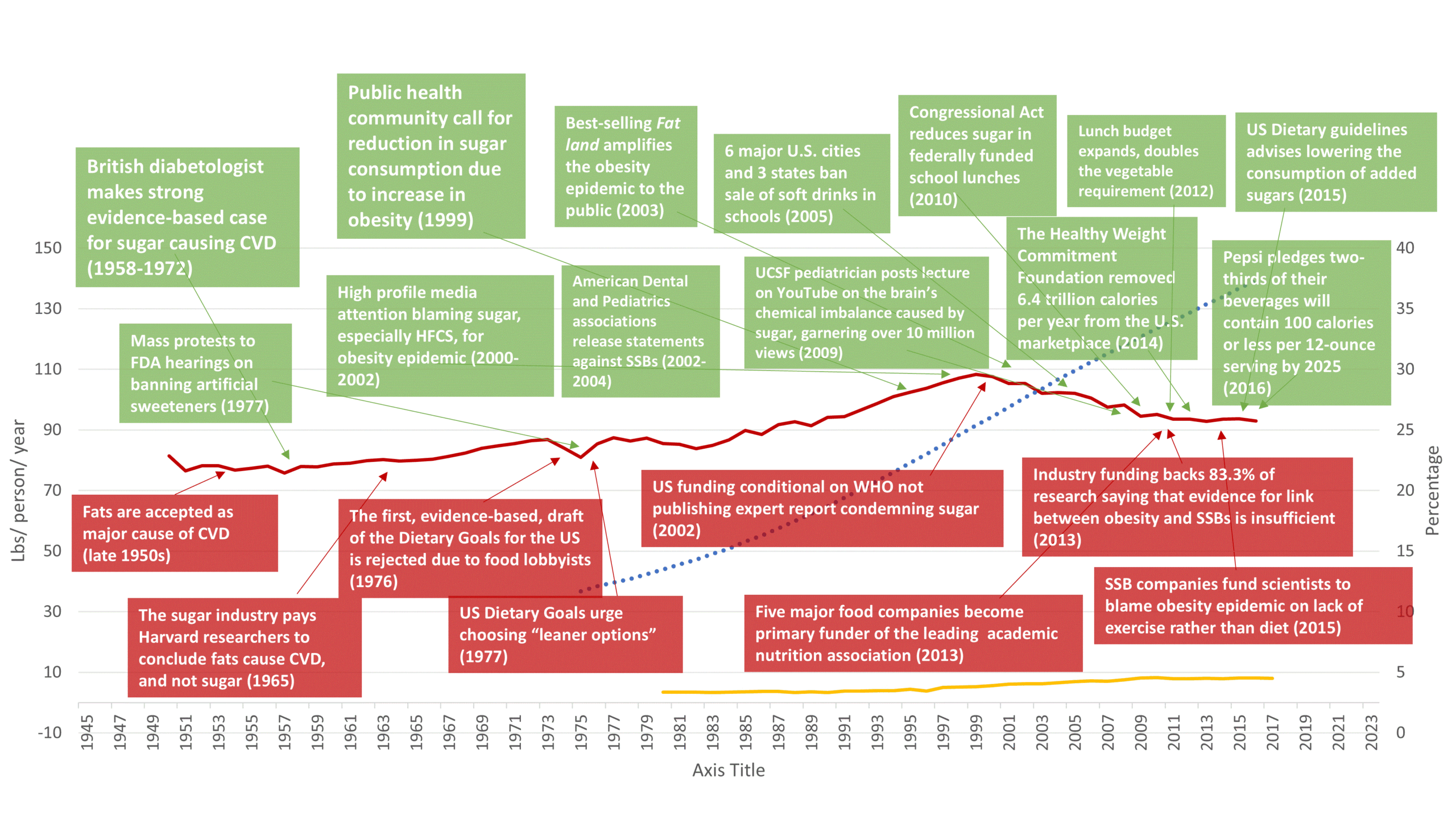
It is essential to identify what events successfully catalyzed a sustained decrease in MDE product consumption. If there is an ongoing MDE where consumption has not been bent, what worked about those key events in the past? Could those events be mimicked with the emerging MDE in the present?
Rimányi E, Quick JD, Hargarten SW, Branas CC, Galea S, Maani N, Lowy J, Hussain Z, Hoffmann N. Firearms as a Market-Driven Epidemic: Potential Pathways to Reduce Preventable Firearm-Related Harm in the United States. Milbank Q. 2026; https://doi.org/10.1111/1468-0009.70100
Hargarten S, Quick JD, Negin J, Hoffmann N. A Roadmap to Effective Gun Violence Policy. Think Global Health Council on Foreign Relations; https://www.thinkglobalhealth.org/article/a-roadmap-to-effective-gun-violence-policy.
Fulton ATT, Boone W, Eichner B, Elosta K, Graves L, Harris K, et al. Addressing gun violence across sectors in Durham, North Carolina. Front Public Health Frontiers; 2026; 14. https://doi.org/10.3389/fpubh.2026.1820117
Rivara FP, Richmond TS, Hargarten S, Branas CC, Rowhani-Rahbar A, Webster D, et al. Toward a Safer World by 2040: The JAMA Summit Report on Reducing Firearm Violence and Harms. JAMA. 2025; https://doi.org/10.1001/jama.2025.18076
Jafar Z, Quick JD, Rimányi E, Musuka G. Social Media and Digital Inequity: Reducing Health Inequities by Closing the Digital Divide. International Journal of Environmental Research and Public Health. 2024; 21: 1420. https://doi.org/10.3390/ijerph21111420
Jafar Z, Quick JD, Larson HJ, Venegas-Vera V, Napoli P, Musuka G, et al. Social media for public health: Reaping the benefits, mitigating the harms. Health Promot Perspect. 2023;13:105–12. https://doi.org/10.34172/hpp.2023.13
Market-driven epidemics methodology, milestones, and metrics: timely science and timely response could save millions of lives – Rimányi E, Quick JD, Karlsson O, Doherty T (S Africa), Yamey G, Brownell K, Immurana M (Ghana), Malik, VS (Canada)
Dynamics of Falling and Rising U.S. State Firearm Rates – Co-led by Duke Kunshan graduate Kate Elosta and Duke junior Nick Hoffmann, with coauthors from Duke, U. Wisconsin, Columbia
WIC breastfeeding and formula use trends during and after the 2022 shortage – Led by recent Duke grad Velda Wang with coauthors from DGHI (Aunchalee Palmquist), Johns Hopkins, University of Maryland, USDA, and South Africa.
Incentivizing corporate accountability in market-driven epidemics: The case of professional football and the CTE epidemic – Senior graduation with honors thesis, Vaya Chhabra, Class of 2026
Authored Media:
“Companies keep selling harmful products – but history shows consumers can win in the end.” The Conversation. 30 Sept 2024. Jonathan D. Quick, Eszter Rimanyi.
“Products Can Harm People for Decades Before Companies Change. Here’s How to Stop Them.” TIME, 9 August 2024. Jonathan D. Quick, Gavin Yamey, and Eszter Rimányi.
Media Outlets and Podcasts:
Exploring the dynamics of combatting market-driven epidemics. EurekAlert!. https://www.eurekalert.org/news-releases/1052636.
“Conversations on Healthcare” Radio Podcast series, Episode 6. Aired November 24, 2024 on Duke radio station WXDU. Discussed tobacco use in youth, the science behind compulsive overconsumption, and what individuals can do to compulsively consume less.
“The Leading Voices in Food” Podcast E258: Do ‘market driven epidemics’ drive your food choices? Hosted by: Kelly Brownell, Sanford School of Public Policy, Duke University. December 18, 2024.
The Double-Edged Sword of Social Media for Global Health. Led by Duke senior Zain Jafar, with panelists from Sanford School of Public Policy, Mexico, Australia. DGHI Think Global March 9, 2023
Quick JD. Changing the Narrative on Gun Violence 2025. https://globalhealth.duke.edu/news/changing-narrative-gun-violence.
From Marlboro to Meta: Combating the health impacts of market driven epidemics. DGHI Think Global. 12 Feb 2025